
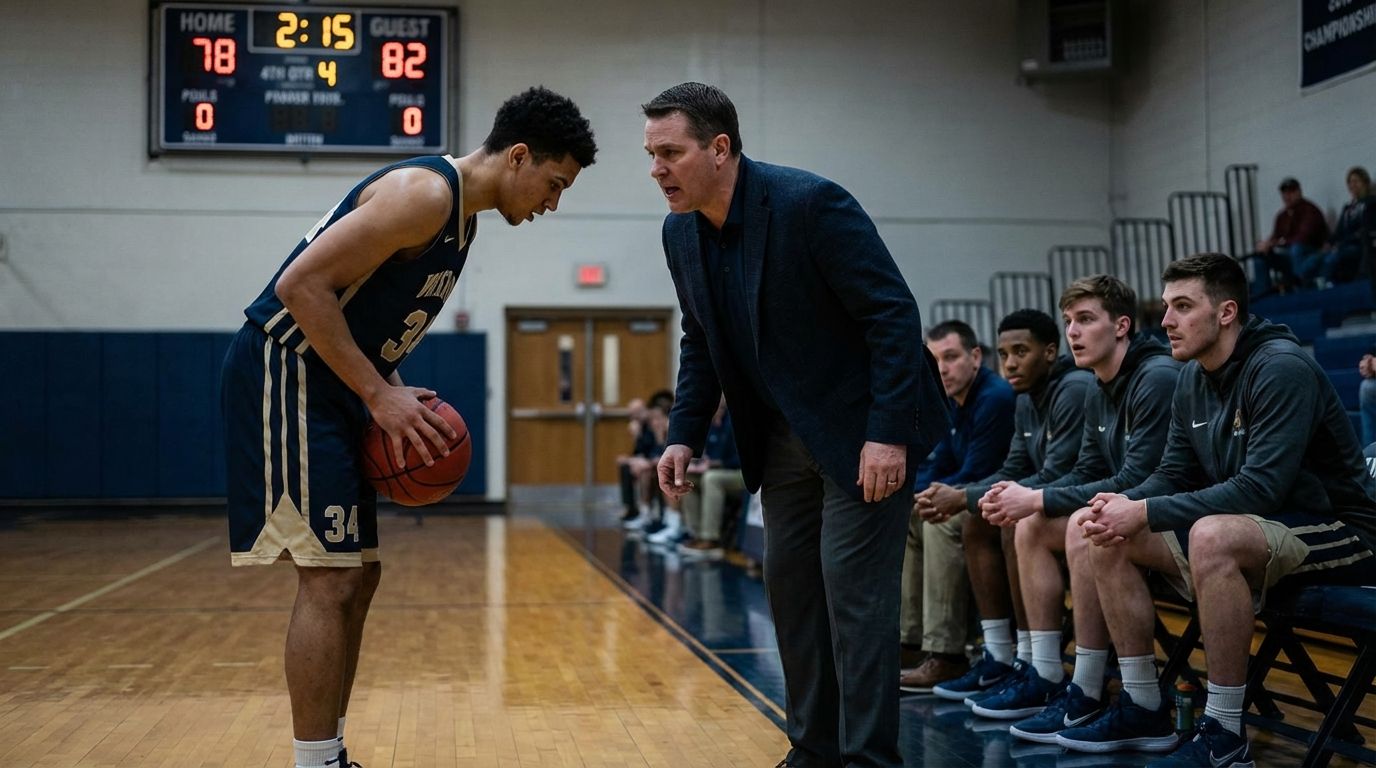
Your best player becomes your team’s biggest problem when winning possessions turns into owning possessions, and the rest of the roster stops developing, stops trusting the pass will come back, and stops performing when the star gets trapped, tired, or cold.
This article shows how to spot the difference between a true go-to scorer and a possession monopolizer, how to use usage and time-of-possession data without getting fooled, and how to fix the “one-player offense” without crushing confidence. Expect practical markers you can measure, coaching constraints that actually work, and decision rules that protect your ceiling in playoffs and close games.
Why Can The Best Player Actually Make A Team Worse?
If the offense runs through one player on every meaningful trip, the team gets a short-term scoring bump and a long-term skill drain. You see it when teammates stop cutting hard, stop relocating with purpose, and start waiting for the shot to go up. The group still scores, but the system loses redundancy, meaning one bad quarter from your star becomes a full-game collapse.
The hidden cost is decision-making bandwidth. When one player takes most of the reads, everyone else stops practicing reads in real time, under real pressure. That shows up late in games when opponents load up and your second and third options look uncomfortable making fast, correct choices.
This pattern is not limited to basketball. Research using Major League Baseball data found that when a superstar is active, non-star teammates in the same unit get fewer opportunities, and early-career players who spend a full season next to an active superstar were more likely to exit the league earlier, which the paper links to reduced development opportunities. Team performance can also drop harder after a superstar leaves because the roster has not built the ability to absorb responsibility. That is the “best player problem” in plain terms: concentration boosts output now, reduces resilience later.
Is Ball Hogging The Same Thing As Being A Go-To Scorer?
No, and confusing the two is how coaches lose locker rooms. A go-to scorer finishes possessions because the offense produces advantage and the defense cannot stop it. A ball hog holds the ball because holding the ball feels like control, even when it creates slow, predictable offense and forces teammates into late-clock bailout shots.
The cleanest separator is whether the ball is creating advantage early in the clock. If your best player attacks a tilted defense, draws two, and triggers clean second actions, that is leadership. If the dribble is used to search for a shot while four players become stationary, that is possession ownership, not advantage creation.
NBA tracking helps clarify the difference. Usage rate is about who ends possessions, time of possession is about who holds the ball, and those are not the same thing. NBA.com explicitly separates them, noting that usage measures the end of a possession while time of possession shows how much a player has the ball in his hands. A player can have high usage with low time of possession by catching and finishing quickly, and that profile tends to keep teammates involved. A player can also have high time of possession without elite creation value, and that is where team offense often starts to stick.
What Stats Or Signs Prove Your Star Is Hurting The Team?
Proof is not one stat, it is a pattern across possessions, lineups, and late-game execution. Start with lineup results: if your best player posts big counting numbers while the best lineups keep needing perfect shooting to survive, you are looking at fragile offense. Then watch what happens when opponents switch coverages, show early help, or trap, if the offense looks confused rather than decisive, the team has not practiced shared decision-making.
Use three “no-excuses” indicators that translate from youth hoops to the NBA. One, high time of possession paired with low team pace and low paint touches usually means the dribble is not generating collapse. Two, high usage without elite efficiency signals the player is spending possessions instead of investing them. Three, teammates stop making “trust movements,” hard cuts, purposeful screens, and quick swing passes, because the reward loop is broken.
Public analysis has used touch-and-pass behavior as a window into ball dominance. A Washington Post piece from April 21, 2014 highlighted a low passes-to-touches ratio concept using SportVU-era tracking, pointing to how often a player touches the ball relative to how often he moves it. That type of measurement is imperfect, but it matches what winning coaches already know: when the ball stops moving, the defense rests, and your offense becomes easier to guard.
Why Do Teammates Stop Playing Hard When One Player Dominates The Ball?
Effort decays when it stops paying dividends. Players will sprint the lane, set violent screens, and defend their matchup with urgency when they believe the offense rewards those actions with touches, rhythm shots, and shared ownership. When they run those same actions and never touch the ball, effort becomes optional, and the entire team’s defensive intensity usually drops right after.
The worst part is how quickly this becomes normal. One teammate stops cutting because the pass never comes, another stops screening with force because the ball handler rejects it anyway, and your spacing gets lazy because nobody expects a quick reversal. Now your best player sees “no one is helping,” which fuels even more control, and the spiral locks in.
Coaches tend to misdiagnose this as an attitude problem. It is usually a design problem. If the offense does not guarantee shared touches, or if the star is allowed to ignore advantage, the locker room reads that as permission to disengage. That is why the fix has to be structural, not emotional.
How Do Coaches Fix A Ball Hog Without Killing Confidence Or Losing Games?
Confidence stays intact when the message is about winning possessions, not shaming a player. The star needs to hear two truths at the same time: the team needs the scoring, and the team needs faster decisions that create shots for others. That is not a motivational speech, it is a role definition with constraints that make the right choice the easiest choice.
Install constraints that force shared offense while still letting the star dominate the right moments. Put a dribble cap on early-clock possessions, require a paint touch before a pull-up, or mandate a pass out of the first trap. Track compliance publicly in film and privately in your reporting, because what gets tracked gets repeated. This is where many coaches fail: they ask for “more passing” but never define the exact decisions that qualify as winning basketball.
At higher levels, manage time of possession as aggressively as you manage shot selection. NBA.com’s tracking distinction gives a clean coaching lever: reduce ball monopolization without reducing finishing responsibility. Move your star off the ball for segments, use him as a screener, run actions that force the first advantage to be created by someone else, then let the star punish the rotation. That builds a team that can survive traps, survive foul trouble, and survive cold streaks.
Are There Real Examples Of Addition By Subtraction Where A Team Improved After Losing Its Star?
Addition by subtraction is real, but it is usually misquoted as “teams are better without stars.” The real lesson is that teams can improve when roles stop overlapping, touches become predictable, and decision-making gets distributed. When the ball moves faster and more people touch it with intent, the defense is forced to guard the entire floor, not one player’s isolation package.
The most repeatable driver is reduced competition for the same type of possession. If two or three players all need high usage and high on-ball time to feel effective, the group tends to waste possessions negotiating whose turn it is. When that overlap gets removed, the remaining roster often plays freer because responsibilities are clear and the shot diet improves.
FiveThirtyEight analyzed superteams and diminishing returns, noting that teams that collect more high-usage players tend to underperform projections, while teams with shooters, passers, and defenders resist those diminishing returns better. That lines up with what shows up on film: too many players who require the ball creates friction, too few connective players creates stagnation. Addition by subtraction is often addition of fit.
When Is Hero Ball Actually The Right Strategy?
Hero ball is correct when it is efficient, quick, and tied to a simple plan the entire team understands. If your best player is producing rim attempts, free throws, and open threes created by collapse, the offense is doing its job. If the possessions end quickly with advantage, teammates stay engaged because they still get touch opportunities and they still have a reason to cut and screen.
Hero ball becomes a problem when it is the default identity instead of a situational tool. If the team runs the same slow isolation late in every quarter, the defense starts the possession already positioned to win. Your star then has to make harder shots to keep the same output, and the margin disappears against elite opponents.
Use a simple internal rule: hero ball belongs in the final eight seconds, after an advantage has already been created, or when a mismatch is confirmed and the floor is spaced correctly. Outside those conditions, require the first action to create rotation, then allow the star to finish the broken defense. That preserves the takeover gene while keeping the team connected.
When Does A Great Player Hurt Team Chemistry?
- When time of possession stays high but advantages created stay low
- When teammates stop cutting, screening, and relocating with purpose
- When the offense collapses against traps or when the star sits
Build A Star System, Not A Star Dependency
Your best player should raise the team’s floor and widen the team’s options, not narrow them. When the ball sticks, the roster loses rhythm, your bench loses confidence, and the late-game playbook becomes one predictable read. Start measuring the right things, usage, time of possession, lineup performance, and “trust movements” on film, then install constraints that force shared advantage creation. Keep the star’s scoring role intact, but move the team from possession ownership to possession investment, and the ceiling rises fast.

Jeffrey Wendel leads business development at Carts and Parts, a top E-Z-GO golf car dealership in Union City, IN. With more than three decades in powersports retail and small-business growth, he specializes in financing, customer experience, and marketing—and also coaches owners on scalable strategies. He is the author of Grand Slam Retirement.