
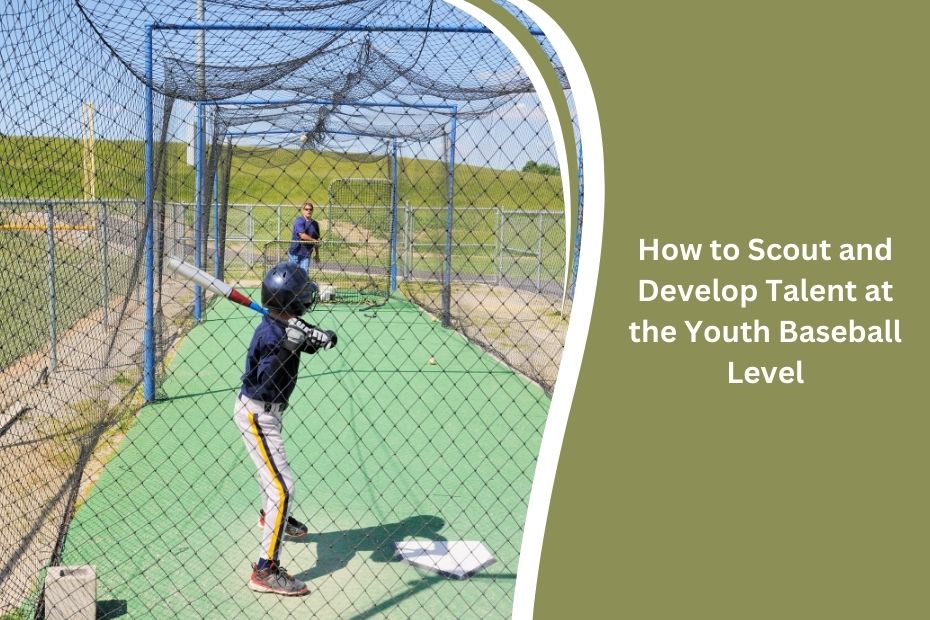
Scouting and developing talent at the youth baseball level requires more than just spotting athleticism—it takes patience, planning, and a structured system built around growth. Every young player starts with potential, but recognizing how that potential can be shaped is the real skill. Talent isn’t always obvious at first glance. Some players stand out with raw tools, while others show a quiet consistency that often goes unnoticed. The goal in youth development isn’t to create instant stars—it’s to lay the foundation for players who can keep progressing year after year. In this article, I’ll break down what to look for when evaluating young athletes, how to create effective developmental environments, and what coaching strategies actually move the needle long-term.
Start with the Five Tools—and Go Beyond Them
The traditional five tools—hitting for average, hitting for power, fielding, arm strength, and speed—still matter. These tools give a baseline for evaluating athletic ability. But at the youth level, they don’t always show up in full form. What I watch for instead is the potential within each tool. Can a player make consistent contact even if they’re not driving the ball yet? Do they track the ball well off the bat even if their arm strength is still developing?
I also pay attention to body control. Can they move smoothly through a ground ball? Do they adjust their swing or throwing motion when needed? A player’s feel for the game often tells you more than their raw output. The best youth prospects usually have something you can’t measure in a stat sheet—they have awareness. They anticipate plays, react with confidence, and make fewer mental errors. Those are signs of a player who can be coached up.
Build Practices That Mirror the Game
Development happens in practice, not in games. If your team plays four games a week and practices once, you’re probably not developing anyone. I structure practices around game situations, decision-making, and pace. A good drill doesn’t just repeat a motion—it creates a scenario. When fielders work on double plays, I throw in bad hops or time pressure. When hitters take live reps, I add variable pitch speeds, count situations, and zone control challenges.
Drills like fly ball progressions, relay throws, and situational rundowns force players to move with intention. I also keep players rotating positions during practice to prevent them from locking into one role too early. Repetition is valuable, but only when it’s paired with awareness. That’s why I emphasize teaching moments between reps—not lectures, but short cues that connect the drill to the real game. If players can link mechanics to game outcomes, they improve faster and retain more.
Fundamentals First, Always
You can’t build anything on shaky mechanics. I teach throwing, fielding, and hitting from the ground up—footwork, body position, timing, and hand control. No fancy tools, no overload. Just reps that enforce good habits. One of the biggest mistakes in youth coaching is skipping past the basics because of game results. I don’t let early success with flawed technique slide. If a player’s swing gets a hit with poor posture or a hitch, I still correct it. Long-term growth matters more than short-term stats.
Throwing mechanics especially need constant attention. Shoulder injuries at the youth level often come from poor habits developed over time—arm drag, over-rotation, or stiff follow-throughs. Correcting those patterns early makes a huge difference later. I keep drills short, give focused feedback, and never overload with technical jargon. If a kid can repeat a clean rep without thinking about it, that’s a win.
Teach Every Position—Even If It’s Not Permanent
Versatility helps players understand the game. I rotate kids through infield, outfield, catcher, and even pitcher when appropriate. This isn’t just for utility—playing different positions builds awareness. A shortstop who’s played outfield knows how to communicate better on fly balls. A first baseman who’s caught a bullpen understands how to frame pitches and manage tempo.
I don’t force kids to master every position, but I give them exposure. Some players find their best position this way. Others build empathy for what their teammates are doing. It also helps players stay engaged—especially those not yet locked into a standout role. Letting them explore keeps the development process fresh.
Prioritize Practice Over Showcases
There’s a lot of pressure these days to play in as many games, tournaments, and showcases as possible. But if you’re always playing, when are you improving? I’ve worked with teams that pulled back on games to double down on skill work, and the results were obvious. More repetitions in controlled environments, more reps without pressure, and more chances to focus on mechanics and decision-making.
Games have their place—but only when the player is prepared to apply what they’ve trained. Without that preparation, you get inconsistency, frustration, and plateaus. I use games to test progress, not create it. When I evaluate a player’s performance in a game, I’m looking at approach, communication, and adjustment—not just results.
Develop Mental Toughness by Creating Safe Failure
Mistakes happen, and youth players will make plenty. I don’t hide from that—I use it. I set up drills and scenarios that push players into difficult spots. I want them to feel failure and learn how to recover from it. The worst thing a coach can do is remove all risk from practice or react negatively when a kid messes up.
Creating a team environment where failure is part of growth is essential. I talk openly about what went wrong—but always with a plan to fix it. I also model that behavior myself. If a drill doesn’t go as planned, I adjust and explain why. That transparency builds trust. When players feel safe to fail, they take more risks, learn faster, and develop confidence that sticks.
Match Development to the Player’s Age and Maturity
What works for a 9-year-old doesn’t work for a 13-year-old. I tailor training plans to fit physical and emotional readiness. With younger kids, I focus on body awareness, balance, and coordination before we chase velocity or exit speed. The goal is to create good movers with good habits. With older kids, I increase intensity, complexity, and accountability.
I follow long-term development models—like those from USA Baseball—that guide which skills to introduce at each stage. This keeps the player’s load balanced and prevents burnout. It also makes sure they’re learning skills when they’re ready to absorb them. There’s no benefit in throwing high-speed curveballs at a kid with unfinished arm mechanics. Timing matters just as much as technique.
Key Strategies to Scout and Develop Youth Baseball Talent
- Identify potential across the five core tools
- Use practice to simulate real-game situations
- Prioritize mechanics over short-term results
- Rotate positions to build complete players
- Practice more than you play
- Use failure as a teaching tool
- Match training to age and maturity
In Conclusion
Scouting and developing talent at the youth baseball level is a long game. It takes consistent effort, clear goals, and a coaching philosophy that values growth over performance. The most successful players I’ve worked with weren’t always the ones who started off as standouts—they were the ones who stayed coachable, committed, and curious. And the best coaches are the ones who created environments that rewarded progress, taught fundamentals without shortcuts, and helped every player understand what they were capable of. If you get that part right, the rest usually follows.
Want more insights on youth baseball development, coaching strategies, and long-term player growth? Follow Tumblr for more articles, drills, and behind-the-scenes perspectives on what it really takes to build better ballplayers from the ground up.

Jeffrey Wendel leads business development at Carts and Parts, a top E-Z-GO golf car dealership in Union City, IN. With more than three decades in powersports retail and small-business growth, he specializes in financing, customer experience, and marketing—and also coaches owners on scalable strategies. He is the author of Grand Slam Retirement.