
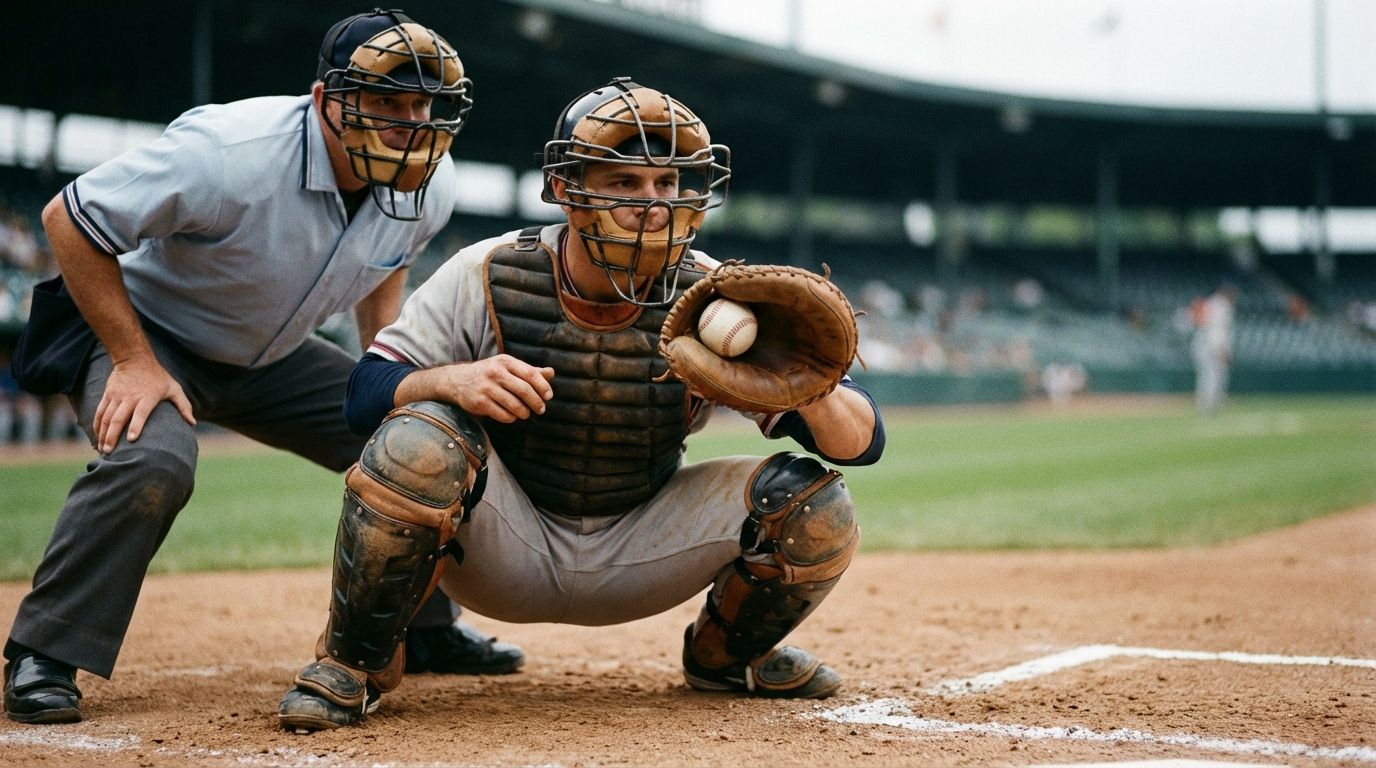
If you want more strikes, fewer “bad calls,” and quicker innings, you don’t start by yelling at the plate umpire. You start by teaching your catcher to receive borderline pitches so the umpire can see a strike and stay with it.
You’re going to get a practical, coach-ready plan for building real framing skill, measuring it, and translating it into wins. You’ll also learn where framing shows up most on the field, which counts change games, how to train “quiet hands” without glove yanks, and how the ABS challenge system changes your priorities without making framing irrelevant.
What Does “Stealing Strikes” Mean, and Does It Actually Save Runs?
Baseball Savant’s Statcast framing model measures how a catcher changes called-strike probability on taken pitches, then converts those “extra strikes” into Framing Runs. Savant uses a 0.125 runs per strike conversion and includes park and pitcher adjustments, which matters because you’re not catching in a laboratory, you’re catching in your home park with your staff’s pitch mix and miss locations.
From a coaching standpoint, the big point is simple: framing isn’t a vibe, it’s a run-value defensive skill. Over a season, the gap between an elite receiver and a poor receiver shows up as meaningful runs, and runs turn into wins. If the staff keeps living on the edges, you’re going to feel that gap in tight games.
Framing also stacks value in places fans don’t notice. The loudest moment is a “stolen” strike three, but the steady money is winning early-count borderline takes, turning 1–0 into 1–1, 0–0 into 0–1, 1–1 into 1–2. Those count flips change pitch selection, swing decisions, and contact quality.
Why Do People Blame Umpires When Your Catcher Can Influence the Call?
You blame the umpire because the call is the only visible decision in the moment. The catcher’s setup, glove path, pocket stability, body posture, head level, and how the ball “stops” in the glove are subtle, and they happen fast. A fan sees a dot on a TV strike-zone box and assumes anything off the line is a miss by the ump.
On the field, you see something different. You see a catcher who stabbed, drifted, or caught the ball on the run. You see a catcher who pulled the glove back to the middle late, or “caught then moved,” which signals “ball” even when the pitch is on the edge. You also see the catcher who receives it clean and still, giving the umpire a stable picture that matches what the pitcher was trying to do.
Teams that coach receiving well tend to reduce the emotional noise around ball-strike calls because the staff gets more “neutral” borderline calls. When your catcher is steady, the staff throws with more conviction. When your catcher is sloppy, the staff starts aiming, which creates more misses, more noncompetitive pitches, more hitter takes, and more frustration that gets pointed at the umpire.
Another piece you can’t ignore: catchers don’t only “steal” strikes. They also keep strikes as strikes. A borderline strike that gets turned into a ball because of recoil, glove drag, or poor posture is a lost opportunity that feels like the umpire, but it’s often the receiver.
Where Are Most “Stealable” Strikes Found, and How Should You Train the Shadow Zone?
The highest framing opportunity lives in the band around the strike zone border that Statcast calls the Shadow Zone. It’s where pitches are close enough that the umpire’s decision is truly in play, and it’s where your catcher’s presentation has the best chance to shift a call.
Practically, that’s the low edge, the low corners, and the off-the-plate edges that still look “catchable” when received with minimal movement. These are also the pitches modern pitchers live on: fastballs that finish at the knees, sweepers that start at the plate and run off, cutters that saw the corner, changeups that fade off late, sinkers that bore in and drop.
If you run random bullpen catching and call it framing work, you’re wasting reps. You need purposeful shadow-zone volume with a clear target: get the glove there early, catch it with minimal drift, and keep the pocket quiet. The goal is not to “drag” a pitch into the zone. The goal is to make the pitch look like it finished where it was intended to finish.
Build a shadow-zone map for your staff. Your pitchers do not miss evenly. Some live down and arm side, some miss glove-side up, some spike breakers. Your best framing gains come from aligning your catcher’s strongest receiving patterns with your staff’s most common miss shapes, then training the weak patterns until they stop bleeding calls.
Which Counts Give You the Biggest Payoff From Framing?
Not all strikes are worth the same thing. The run-value swing of a called strike depends on count leverage, because the difference between outcomes after the pitch is not constant from count to count. SABR research describes framing valuation that weights count leverage, where a framed pitch on a full count carries more value than a framed pitch in a low-leverage count because the swing in expected results is larger.
From a coaching seat, the takeaway is actionable: you prioritize framing training and performance review in the counts that move plate appearances. You track the borderline takes on 0–0, 1–0, 1–1, 2–1, and the two-strike “expand” pitches that can either finish an at-bat or extend it.
You also teach catchers and pitchers to coordinate intent. If the pitcher is throwing a purpose pitch for a chase, the catcher’s job is still to receive it as well as possible, but the target and glove path need to match the intent so the pitcher doesn’t yank the ball trying to “hit the glove.” That coordination matters most in leverage counts where a single call changes the inning.
One more coaching reality: hitters adapt. If your catcher steals low strikes consistently, hitters start protecting the bottom edge earlier, which changes their swing plane and decision timing. That can raise soft contact and weak ground balls, even on pitches that never become called strikes. You won’t see that on a framing leaderboard, but you will see it in your staff’s pitch efficiency.
How Do You Teach Catchers to Steal Strikes Without Yanking the Glove?
You coach quiet receiving, not salesmanship. A hard glove yank is a billboard that says, “I didn’t catch that clean.” At higher levels, umpires resist being “shown up,” and hitters notice the movement too. Quiet hands win more calls because the glove becomes a stable reference point.
Start with setup discipline. Your catcher’s head height, torso angle, and glove starting position create the baseline visual the umpire uses all game. A catcher who changes posture from pitch to pitch creates a moving strike zone for the umpire. A catcher who stays consistent helps the umpire lock in and stay with borderline calls.
Then coach the catch itself: beat the ball to the spot, receive it with soft fingers, and stop it in a firm pocket. You’re training “catch and hold,” not “catch and show.” The glove works to the ball early, then becomes still at receipt. The wrist stays strong, the elbow doesn’t flare, and the glove doesn’t drift after contact.
Your best cue is measurable: if the glove continues moving after the ball hits leather, calls trend against you on the edge. Umpires read post-catch movement as correction, and correction reads as “ball.” Train the catcher to present the pitch as a finished product, not a pitch that needed help.
Drill selection matters. Partner framing reps that force controlled receiving and a held finish build repeatability. Toss work is useful only when it replicates real timing, real glove path, and real receipt, not when it turns into a hand-eye warmup that never challenges posture or glove stability.
Adding barehand receiving work can clean up recoil and stiff hands. When you remove the mitt, the catcher learns to track the ball longer, soften the catch, and avoid panic stabs. When the mitt goes back on, the hands often stay quieter because the catcher stops “hunting” the pitch with the glove.
Does One-Knee Catching Help or Hurt Framing, and How Do You Decide?
One-knee setups can help certain catchers receive low pitches because they lower the glove position and reduce the amount of vertical travel needed to catch at the knees. They can also reduce wear over a season. That’s why you see it across levels.
But one-knee is not a free upgrade. Your catcher still has to block, throw, and move. If the one-knee posture locks the hips, slows lateral adjustment, or forces the glove to work around the body, you can lose more calls than you gain. Low pitches are where most framing opportunity sits, but low pitches are also where blocking mistakes turn into bases.
FanGraphs analysis has discussed the relationship between framing and blocking, noting that receivers who “catch the ball well” often perform well across skills, but the opportunity sets and variances differ. That matters when you’re making posture choices: you don’t evaluate one-knee by feel, you evaluate it by tracked outcomes in the locations your staff actually throws.
Use a decision rule that keeps the room honest. If one-knee improves low-strike conversion without increasing passed balls, without degrading lateral movement, and without reducing throwing readiness in your game situations, it stays. If it creates a blocking leak or turns glove-side low pitches into drift-and-stab catches, you adjust. You can also split posture by situation: nobody says your catcher must use the same stance with nobody on, runners on, two strikes, or a known spike-ball pitcher on the mound.
Coaching one-knee correctly means coaching the same receiving principles: head still, glove early, catch quiet, hold the finish. If your catcher uses one-knee as a crutch for laziness, the glove starts traveling late and the body starts collapsing. That’s when the setup becomes a problem, not a tool.
With MLB’s ABS Challenge System, Is Framing Still Worth Teaching?
Yes, because the system is an ABS challenge format, not full-time automated calling on every pitch. Human umpires still call balls and strikes, and only a limited number of calls can be challenged. MLB has stated the batter, pitcher, or catcher can initiate a challenge, and clubs begin with a set number of challenges, retaining a challenge when successful.
That keeps framing relevant for two reasons. One, most takes still live and die with the human call. Two, challenge resources become strategy. If your catcher is a poor receiver, the team burns challenges to fix calls that a strong receiver wins without spending anything. Baseball America has also pointed to the practical impact: weak framing can force a club to use challenges on borderline pitches that could have been earned with better receiving.
Coaching adjustments are straightforward. You train your catcher to be an on-field decision-maker: when to challenge, when to eat it, when the pitcher’s miss pattern makes a borderline call more likely to be overturned. You also train your staff to accept that the strike-zone box on a broadcast is not the strike zone used for review, and you keep the dugout from turning challenge decisions into chaos.
The bigger coaching angle: if the league nudges toward more automated correction over time, the teams that win are still the ones that control run prevention at the margins. Receiving remains part of that package, along with blocking, throwing, game-calling, and pitcher execution. If you stop training framing, you hand opponents free edges until the day every pitch is automated, and that day is not how the system is being deployed right now.
How Do You Teach a Catcher to Steal Strikes?
- Win the shadow zone: glove early, head still, catch quiet
- Hold the finish: stop the ball in a stable pocket
- Train edge counts: 0–0, 1–1, two-strike expand
- Measure called-strike gains, not “pretty catches”
Put More Strikes on the Board Starting This Week
You don’t control an umpire’s eyes, but you control what gets presented to them on every taken pitch. When you train your catcher to win the shadow zone with quiet hands, stable posture, and a held finish, borderline pitches stop feeling like coin flips and start showing up as called strikes. When you align that receiving work to high-leverage counts, you turn one extra strike into a shorter at-bat, a better pitch mix, and fewer pitches with runners on. With ABS challenges in play, strong receiving still saves value by reducing how often you need to spend challenges to “fix” borderline calls. Build the plan, track it, and hold the catcher room to the standard: no more donating strikes and then arguing about it.
References
- Statcast Catcher Framing Leaderboard | Baseball Savant
- Hitter and Catcher Adaptation in Major League Baseball | SABR
- MLB to Use ABS Challenge System Starting in 2026 | MLB.com
- 11 Things To Know About MLB’s New ABS Challenge System For 2026 | Baseball America
- MLB Will Use Robot Umpires in 2026 (ABS Challenge Format) | AP News
- The Relationship Between Framing and Blocking | FanGraphs
- Cross Partner Framing Drill | Dugout Edge
- Baseball Catching Skills: The Barehand Receiving Drill | DICK’S Pro Tips
- Reddit Discussion: What Does It Mean When a Catcher “Steals a Strike”?

Jeffrey Wendel leads business development at Carts and Parts, a top E-Z-GO golf car dealership in Union City, IN. With more than three decades in powersports retail and small-business growth, he specializes in financing, customer experience, and marketing—and also coaches owners on scalable strategies. He is the author of Grand Slam Retirement.