
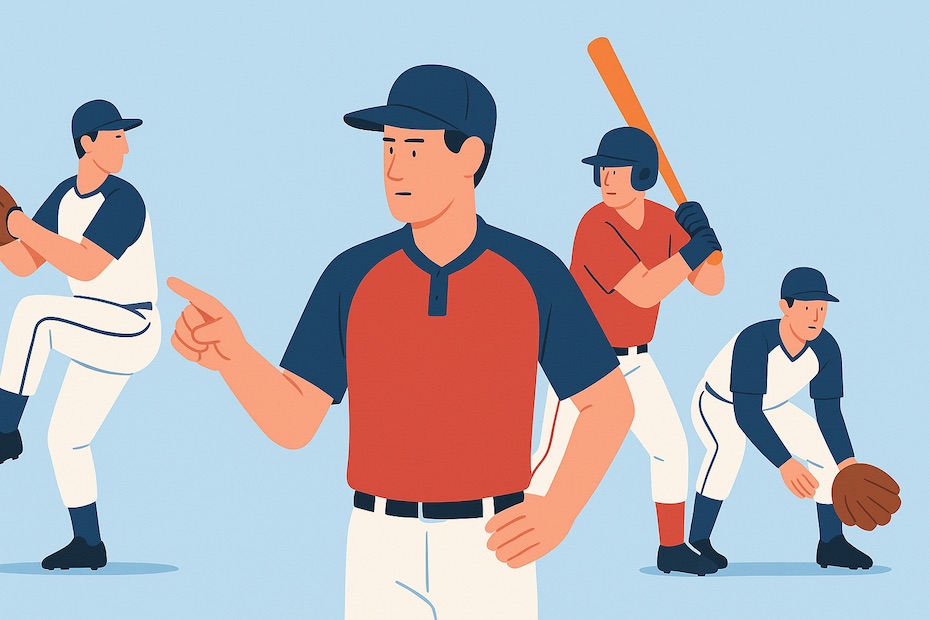
You coach more effectively by tailoring methods to the unique needs of pitchers, hitters, and fielders, rather than applying a one-size-fits-all system. Each role requires distinct strategies, cues, and training priorities.
This article breaks down position-specific coaching with practical, real-world approaches. You’ll learn how to simplify mechanics for pitchers, reinforce effective hitting cues, sharpen fielding fundamentals, and adapt communication to player personalities—all while building stronger team performance.
What makes position-specific coaching effective in baseball?
Position-specific coaching is effective because each role demands a specialized skillset and mindset. Pitchers balance mechanics and mental toughness, hitters refine approach and swing consistency, and fielders master reaction, positioning, and throwing accuracy.
When you tailor coaching, you maximize a player’s development in their role. The pitcher doesn’t need endless hitting drills, nor does the fielder need complex mound mechanics. Instead, they need precision training that makes them sharper at what their position demands.
You’ll see better results, less frustration, and faster development. It creates a system where players thrive individually, which directly translates to better team outcomes.
How should you simplify instruction for young pitchers?
Young pitchers often drown in too much advice. You make progress by focusing instruction on balance, rhythm, and a repeatable delivery. That foundation matters more than velocity at early stages.
One effective drill is having pitchers hold their balance point before delivering. This teaches body awareness and rhythm, building control. Overcomplicating mechanics early just creates bad habits that are harder to undo later.
Focus on one or two key cues per session, not five or six. Simplicity builds confidence. A pitcher who feels comfortable and repeatable can later scale into velocity and command training.
What hitting cues reliably improve swing mechanics?
Good coaching cues connect directly to what the hitter can process. Internal cues focus on body action (“keep hands inside”), while external cues direct attention to the ball or result (“drive it the other way”).
Many hitters respond better to external cues. “See it deep” often helps more than dissecting elbow angle. By shifting their focus outward, you keep them relaxed and reduce overthinking.
For hitters who consistently pull off the ball, cues like “stay through the middle” reinforce correct bat path. The right cue depends on where the hitter’s breakdown occurs, which means you must watch closely and adapt.
How do you teach fielding fundamentals across infield and outfield?
Infielders need to react quickly, play the hop, and transition to throwing with speed. Teach them glove angles, footwork, and consistent pre-pitch readiness. Short-hops and fungo work build these instincts.
Outfielders rely on reads, angles, and momentum. Teaching them to break on the first step and run full speed to spots rather than drifting improves reliability. Long-throw drills that integrate crow-hop mechanics refine accuracy and arm strength.
Different positions demand different training, but one constant is repetition under game-like pressure. Fielders grow confident when you recreate the tempo and unpredictability of real plays.
How do pitchers benefit from tailored mental coaching?
Pitching is part mechanics, part psychology. Even with perfect mechanics, a pitcher collapses without composure. You strengthen pitchers by tailoring mental coaching to their personality and pressure tolerance.
Some pitchers respond to calm reminders on the mound. Others need firm, direct correction. Learning how each athlete processes stress helps you deliver the right feedback in the moment.
Incorporating breathing routines, pre-pitch focus points, and visualization techniques makes a measurable difference. A pitcher who feels mentally equipped can execute mechanics more consistently under pressure.
What does position-based role communication look like?
Role-based communication ensures clarity. Catchers need detailed discussions about pitcher tendencies, game flow, and sequencing. Hitters benefit from short, targeted instructions—what counts to attack, when to adjust, and what pitch to anticipate.
For fielders, you use quick, direct commands: “Cut two,” “Back up,” or “Charge.” This keeps decision-making crisp and aligns the unit defensively.
Communication is as much about timing as content. Too much mid-game information slows players down. The right word at the right moment locks their attention on execution.
How can coaches adapt to different player personalities and skill levels?
No two players learn the same way. You must observe whether an athlete thrives on structure, freedom, analytics, or simple verbal coaching. Adjusting to their personality accelerates learning.
A player with high technical aptitude may benefit from video breakdowns. Another may only need a verbal cue or physical demonstration. Both reach the same end goal, but the route changes.
Elite coaches consistently adapt without losing consistency in standards. You hold players accountable to fundamentals while customizing delivery to match their strengths. That balance makes you both effective and respected.
Top Position-Specific Baseball Coaching Tips
- Focus pitchers on rhythm and balance
- Cue hitters with external focus points
- Train infielders on quick reactions, outfielders on reads and angles
- Tailor pitcher mental routines
- Adapt coaching to player personality
In Conclusion
You elevate your coaching when you stop treating every position the same. Pitchers, hitters, and fielders each demand distinct strategies—from mechanics and cues to communication and mindset. By simplifying pitcher drills, refining hitter focus, sharpening fielder instincts, and tailoring your message to each personality, you develop players faster, build trust, and strengthen the entire team.

Jeffrey Wendel leads business development at Carts and Parts, a top E-Z-GO golf car dealership in Union City, IN. With more than three decades in powersports retail and small-business growth, he specializes in financing, customer experience, and marketing—and also coaches owners on scalable strategies. He is the author of Grand Slam Retirement.